

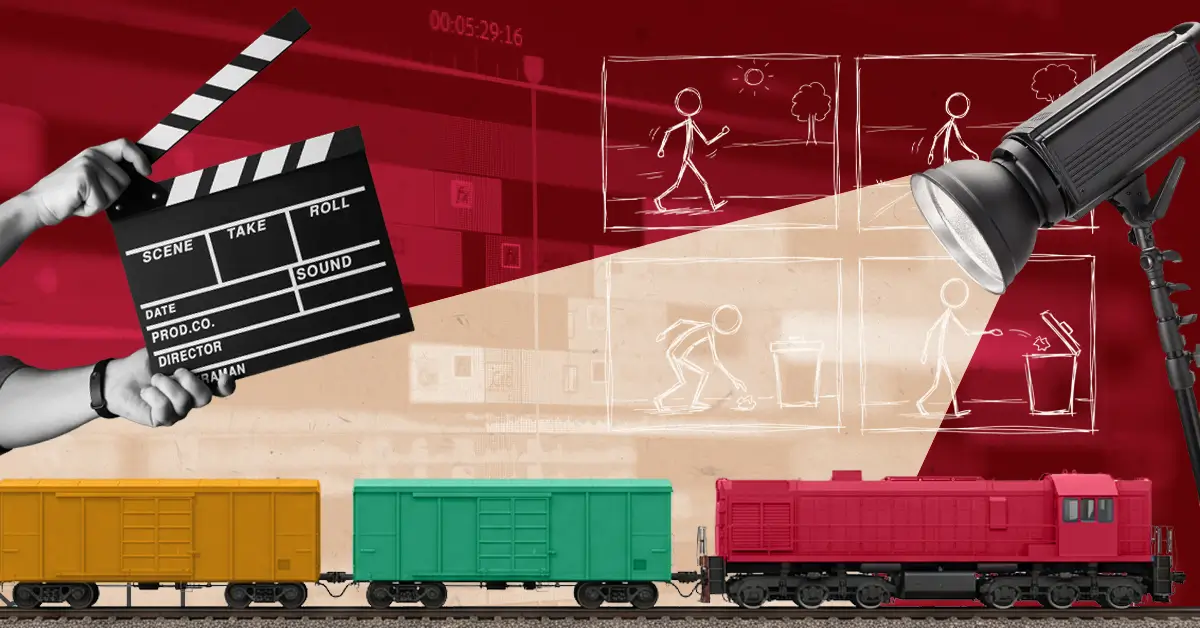
Metaphors have always helped me both understand and explain processes. When it comes to video prep and production, a train comes to mind. With the right cars linked in order on the track, you can get where you want to go for both highly produced and organic video. So, let’s talk about the train that leads to meaningful video work. All aboard.
The Engine: The Narrative
Quality video content takes a process. Capturing and producing the type of video work that resonates requires an intentional approach. Back to the train. For me, the train as a whole is the narrative; that’s what drives your story and, subsequently, your video. Without it, you derail quickly. This is the core idea behind the production, expressed in the simplest way possible. And that means one narrative. Too many ideas and your project loses direction. An intentional approach and repeatable process solidifies your narrative and also helps keep your project on time and within budget.
The Coal Car: Pre-Production
Great video requires thoughtful prep, so we’re packing a lot on this car:
- Scene-By-Scene Storyboard
- Equipment & Settings
- Scouting
- Lens Types
- Lighting Diagram
The storyboard visualizes our narrative. That informs the specific equipment, lens styles, and settings we need. We also use the storyboard as a guide when we scout locations. The lighting diagram establishes our camera, people, and object placement and becomes a reference doc for the entire shoot. In a production with several scenes and settings, we’d create a diagram for each.
Prep work should be both technical and artistic, determining why and how you set scenes.
The Production Car: Filming
And now we film. All of our prep makes this easier. With an established storyboard and selected equipment and presets, anyone on our team can step in and film. It allows us to capture exactly what we want but also stay nimble enough to adjust on the fly. Some of our best shots have been unplanned, like a walk through the corn outfield at the Field of Dreams or a butterfly landing on a person’s finger at Indian Creek Nature Center. We’re ready for it all because of our setup and a skill you can’t always teach: keen observation.
The Post-Production Car: Editing
Everything’s captured. We have our footage. We’ve compiled our interviews. Now, we need to sequence it together in a way that’s coherent, compelling, and serves the narrative. Film excited, edit intentionally. A great editor takes disparate footage and creates the story. Editing is its own artform.
The Caboose: Behind the Scenes
Ever seen a video and wondered, “How’d they do that?”
Going behind the scenes provides the answer.
We film ourselves filming. It’s a unique perspective that showcases our process and gives people a literal glimpse behind the camera(s). Behind-the-scenes footage adds authenticity and another asset to video work, revealing the inner workings. It’s great content for us and our clients to use on social and elsewhere. It also builds an extra layer of trust between you and your audience by confirming people made this.
That’s a Wrap
If you’re producing your own video or working with a team, keep the following aspects in mind. Identify your narrative, create a pre-production checklist, stay nimble and observant during filming for both project footage and behind-the-scenes, and refer back to your storyboard during editing. Missing one car quickly takes your figurative train off the tracks. But bringing it all together creates a video that connects with people and gains recognition.
Sometimes, that recognition is regional and international. Our video for Frontier Co-op, “The Human Impact of Second Chance Hiring,” recently took home First Place at the NOVA Awards and received an Award of Distinction from the Communicator Awards.
And our “Never Blend In” campaign for Cedar Ridge also received the Communicator Awards’ Award of Distinction.
